For a long time, basements had one job: hold the stuff you didn’t want to think about.
Holiday decorations. Old furniture. Boxes you swear you’ll go through “one day.” And maybe—if you were lucky—a washer, dryer, and a bare bulb hanging from the ceiling.
But today’s basements are being asked to do a lot more.
Home offices. Playrooms. Guest suites. Home gyms. Movie nights. Quiet escapes. The challenge? Making the space feel warm, comfortable, and inviting—not dark, damp, or forgotten.
Turning a basement into real living space isn’t about copying what you’d do upstairs. It’s about understanding what makes basements different—and designing around it thoughtfully.
First Things First: Light Changes Everything
If a basement feels like a cave, lighting is usually the reason.
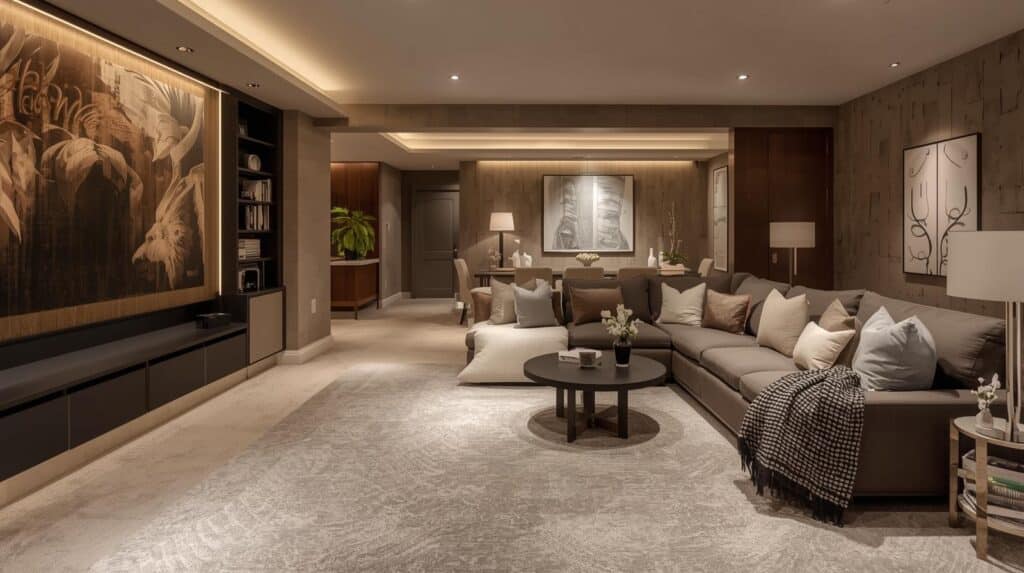
Most basements rely on a few small windows (if any), which means overhead lighting alone won’t cut it. A modern basement uses layers of light to create warmth and depth.
Recessed lighting keeps ceilings clean and bright. Wall sconces and lamps soften the space and make it feel lived-in. And when possible, enlarging window openings or adding window wells can dramatically change how the room feels.
The goal isn’t to make the basement feel bright like a showroom—it’s to make it feel comfortable, balanced, and natural.
Layout Matters More Than Square Footage
One of the biggest mistakes we see in basement renovations is trying to do too much at once.
Open layouts work well, but basements still benefit from subtle zoning. A media area might feel best tucked into a quieter corner. A home office needs separation. Storage should be intentional, not an afterthought.
Ceiling height plays a major role here. Mechanical systems, beams, and ductwork can dictate how spaces are arranged. Smart layout design works with these constraints instead of fighting them—using soffits strategically and keeping main areas as open as possible.
When the layout is right, the basement feels purposeful—not like leftover space.
Moisture Control: The Part You Don’t See (But Feel)
A basement can look beautiful and still fail if moisture isn’t handled correctly.
Before finishes go in, the space needs to be properly protected. That means addressing water intrusion, managing humidity, and choosing materials that can handle below-grade conditions.
Proper insulation, vapor barriers, drainage solutions, and dehumidification all work together to keep the space comfortable year-round. When this step is skipped or rushed, basements end up feeling cold, musty, or uncomfortable—no matter how nice the finishes are.
Done right, a basement should feel just as dry and comfortable as the rest of the home.
Finishing Choices That Make a Basement Feel Like Home
Finishes are where basements truly transform.
Lighter wall colors help reflect available light. Luxury vinyl plank and engineered flooring provide warmth without moisture concerns. Drywall ceilings (where possible) instantly elevate the space compared to exposed joists.
Built-ins, millwork, and thoughtful storage help the basement feel finished and intentional—not temporary. Even small details like trim, doors, and hardware play a role in making the space feel cohesive with the rest of the house.
The goal isn’t to hide the fact that it’s a basement. It’s to design it so you forget about it altogether.
The Best Basements Don’t Feel Like Basements
A modern basement shouldn’t feel like an afterthought or a compromise.
When lighting is layered, layout is intentional, moisture is controlled, and finishes are chosen wisely, a basement becomes real living space—space you actually want to use.
At Authentic Renovations, we help homeowners rethink what their basements can be. Not darker. Not colder. Just smarter, warmer, and designed for real life.
If you’re ready to turn your basement from storage into something truly livable, we’re here to help.
Contact us today for a free consultation at (860) 878-9707